Showing posts with label reading skills. Show all posts

Activity of the Week

Each week I work with over 50 children, teaching them English or working on developing other skills through the Montessori educational method. It has become part of my philosophy to individualize each lesson according to each child. Once in a while though, certain activities prove to be of great success with almost all children, so I suggest them to others as well.

A popular activity of the last week was enhancing the wild animals vocabulary, through listening, singing, reading and discussing with the help of two great instruments from Barefoot Books: Walking Through the Jungle video and book by Stella Blackstone, illustrated by Debbie Harter and sung by Fred Penner.

Firstly, the children watch and listen to the video:


I often played it twice, firstly because the children asked for that, and I wanted to follow their interest, secondly because I asked them to focus on what they see, then on what they hear.


Afterwards, I took out the Walking Through the Jungle book, with similar illustrations. The children loved the colorful images, and graphic of the animals. I liked the book because it presents animals together with the environment they live in, thus making it easier for them to build later on connections with countries and continents.

With the help of the book, taking into account the level of development of each child, the following activities can be done:


  1. Reading the lyrics of the song. Through repetition they consolidate their reading skills, and gain confidence to read further. 
  2. After reading comes translation, for the ESL children. Make sure they all understand what they are reading / saying.
  3. Identifying each animal in relation to the environment. If you have world maps, globes or puzzle maps, it would be a good way to take the learning further and associate each environment with its place on the map.
  4. Discussions on animal behavior. Make sure they know it is normal to be afraid of these animals and to stay away from them because they might be dangerous. In the book, characters are running from the ferocious wild animals, but in the end they all gather together for supper, giving a positive psychological closure of the adventure, but also a humorous creative ending. The children laughed about what each animals was eating and how the whale "poured" water for the girl. This type of creating ending could stimulate their imagination. Some questions for that can be: What would happen if these wild animals would come at your home for dinner? What would you feed them with? 
  5. Grammar activities focusing on the lyrics. Children can identify, write or mime each of the action words (verbs), naming words (nouns) or describing words (adjectives).
  6. If you have sets of plastic wild animals you could take the activity further by sorting out the animals they have seen in the book / clip. To further consolidate classification they could be sorted by color, environment, what they eat, certain skills they have such as swimming or climbing, etc. 
  7. Painting or drawing with the book illustrations as inspiration. Each child can make his/her own version of the jungle, the desert or any other place described in the book.
I am sure this list could go on with endless activities that can build or consolidate learning. What other books related to wild animals do your children enjoy?
Have a great week, full of wonderful, sparkling learning moments!


Literacy in Schools: The Reading Tree

Have you ever heard of a Reading Tree?

I myself often enjoy reading in the park under certain trees, but this concept is something a bit different. It is related to literacy in class and it encourages one of the healthiest intellectual activities for children with the involvement of the whole community of children, including their parents! It helps children develop their reading skills thus enhancing their vocabulary and understanding of the world, it allows a whole class to work for a common goal and it also creates some understanding around biology concepts around the tree as a living habitat.

So here is how such a project can happen:


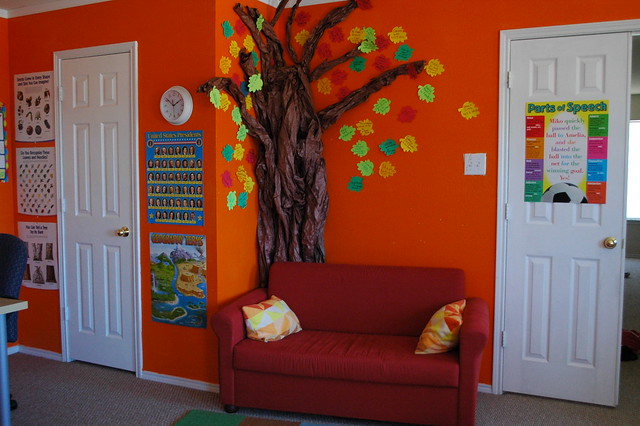
  1. Teachers build a real size tree (trunk and branches) and place it somewhere in the classroom. 
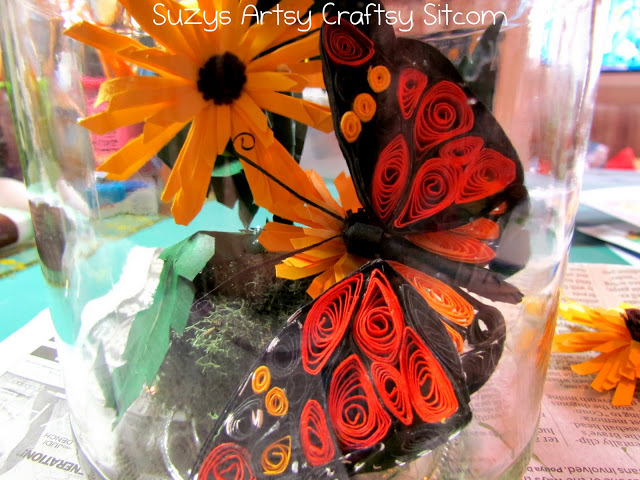
  2. Teachers then build different types of crafts on categories: for ex.: leafs for level 1, flowers for level 2, apples or other fruits for level 3, caterpillars for level 4, chrysalis for level 5 and butterflies for level 6. For these two steps the help of an artist should be more than welcome. Perhaps you have one in your parents community?
  3. Teachers then introduce the project to the children and parents: The Reading Tree is set at the beginning of the school year and can be cleared at the end. This project is suitable for all years, provided that the levels are adapted to the children's age. Children are told that this project aims to encourage them to read more and find out more things about the world or themselves. The advantages of reading should be explained, but teachers should also accept the fact that there could be children who refuse to participate in the project. Again, the project is not mandatory! Each child is given a reading card or booklet. One can be created and adapted by the teachers or just downloaded from any site with teacher resources. Here is an example:  
Each child should write down the titles of the book/s they read, the pages or hours spent reading and any other comments. The parents should then put a signature there as well, not so much to confirm what the child wrote but to show they are also aware of the child's efforts and that they also support and encourage the child at home. Teacher and parents should, for example provide a NON MANDATORY reading list, for different levels of reading, which the children could use for choosing their books. They could be group by themes or by the different concepts they will learn at school for each subject throughout the year. Children should be free to choose whichever books are appropriate for their age, following their interests and curiosities. This projects also offers children a good opportunity to learn about the School Library or the County Library.


       4. Different levels are then established. For example a child reaches level 1 after completing one hour of reading or 20 pages. For level 2, two or three hours or the equivalent in pages, and so on. Once the child has completed a certain level, s/he brings the completed reading card to the teacher. The teacher then gives him/her the correspondent craft for the level s/he completed, which the child will then hang in the Reading Tree, with a little paper note attached with his/her name on it and date.

Special "seasonal" crafts can be created for Easter, Christmas, Summer or Autumn. Should someone reach level 6 before the year is finished, then other levels can be created, with crafts such as cones, bird nests, birds or bees. The theme of the tree should be respected, as it is a wonderful opportunity for children to refresh biology concepts such as species of trees and correspondent leafs, life cycles, tree mini beasts, birds or the tree as a habitat.

Something else that can be done to support reading through this project is to create a Reading Cosy Corner under the tree, by adding a couch or bench with pillows. On the nearest walls you could put some shelves and children could bring at school some of their favorite books to share with colleagues. These books could be browsed during breaks or during language classes. The teacher/s could build activities around it to keep it active and the children engaged.


   5. At the end of the school year, the Reading Tree should be filled with life, and lots of colored, beautiful proofs of the children's work to build themselves as individuals and community. Since all the crafts will be named and dated, they can be taken home and kept in the family archive :).

I have discovered this project working with two wonderful children who participate in it at school at the International German School of Brussels. I hope it will inspire parents and teachers to build many more stimulating learning environments all around the world! Enjoy your reading everyone!

Source of pictures:

1. http://www.tipperarylibrarynews.ie/wp-content/uploads/2008/07/clonmelrt.jpg
2. http://farm5.staticflickr.com/4053/4458531454_cd4916c35e_z.jpg
3. http://suzyssitcom.com/wp-content/uploads/2011/07/Quilled-Butterfly5.jpg
http://pad3.whstatic.com/images/thumb/2/2e/Make-Ornamental-Pine-Cones-for-Christmas-Step-3.jpg/670px-Make-Ornamental-Pine-Cones-for-Christmas-Step-3.jpg

Reading charts:

http://www.sparklebox.co.uk/misc/homework/reading.html#.UpNgR9KkpZP

Crafts:

http://suzyssitcom.com/2013/05/feature-friday-quilled-bug-in-a-jar.html
http://www.wikihow.com/Make-Ornamental-Pine-Cones-for-Christmas