Showing posts with label language development. Show all posts

Activity of the Week

Each week I work with over 50 children, teaching them English or working on developing other skills through the Montessori educational method. It has become part of my philosophy to individualize each lesson according to each child. Once in a while though, certain activities prove to be of great success with almost all children, so I suggest them to others as well.

A popular activity of the last week was enhancing the wild animals vocabulary, through listening, singing, reading and discussing with the help of two great instruments from Barefoot Books: Walking Through the Jungle video and book by Stella Blackstone, illustrated by Debbie Harter and sung by Fred Penner.

Firstly, the children watch and listen to the video:


I often played it twice, firstly because the children asked for that, and I wanted to follow their interest, secondly because I asked them to focus on what they see, then on what they hear.


Afterwards, I took out the Walking Through the Jungle book, with similar illustrations. The children loved the colorful images, and graphic of the animals. I liked the book because it presents animals together with the environment they live in, thus making it easier for them to build later on connections with countries and continents.

With the help of the book, taking into account the level of development of each child, the following activities can be done:


  1. Reading the lyrics of the song. Through repetition they consolidate their reading skills, and gain confidence to read further. 
  2. After reading comes translation, for the ESL children. Make sure they all understand what they are reading / saying.
  3. Identifying each animal in relation to the environment. If you have world maps, globes or puzzle maps, it would be a good way to take the learning further and associate each environment with its place on the map.
  4. Discussions on animal behavior. Make sure they know it is normal to be afraid of these animals and to stay away from them because they might be dangerous. In the book, characters are running from the ferocious wild animals, but in the end they all gather together for supper, giving a positive psychological closure of the adventure, but also a humorous creative ending. The children laughed about what each animals was eating and how the whale "poured" water for the girl. This type of creating ending could stimulate their imagination. Some questions for that can be: What would happen if these wild animals would come at your home for dinner? What would you feed them with? 
  5. Grammar activities focusing on the lyrics. Children can identify, write or mime each of the action words (verbs), naming words (nouns) or describing words (adjectives).
  6. If you have sets of plastic wild animals you could take the activity further by sorting out the animals they have seen in the book / clip. To further consolidate classification they could be sorted by color, environment, what they eat, certain skills they have such as swimming or climbing, etc. 
  7. Painting or drawing with the book illustrations as inspiration. Each child can make his/her own version of the jungle, the desert or any other place described in the book.
I am sure this list could go on with endless activities that can build or consolidate learning. What other books related to wild animals do your children enjoy?
Have a great week, full of wonderful, sparkling learning moments!


Two by Two: Two Montessori Inspired Books for Preschoolers

Two by Two is an exciting children literature project. Its purpose is to bring more or less known children books in the attention of teachers, parents and children around the world, paired on specific themes such as death, communication, self esteem, anger management, friendship or unconditional love. A lot of these books were brought to my attention by a very dear friend, with whom I share  the passion for child literature. Almost all of these books are in my personal library, carefully chosen to fulfill some of the criteria described here, and have been used during my teaching classes. The children I work with had wonderful reactions to them, and this has inspired me to write this Two by Two series.


Maria Montessori was a remarkably bright girl who grew up to shake the foundations of the traditional education system. Although her method is becoming increasingly popular (you can read a detailed article about it here), there still are many less known facts about her life. She grew up in a period when women were not allowed to vote or to make decisions for themselves. She was one of the first Italian girls to be allowed public education. She challenged the norms by deciding to take technical studies, then switched to medicine. She was sensitive but strong willed and liked to do things her way. She was a fast learner and quickly adopted good case practices from around the world and took on the challenge to work with very disadvantaged children. She then grasped the first opportunity to work with normal children and by observing them and their needs, she designed materials and activities that could help them grow happy and independent. She lectured in countries around the world and assisted in the opening of many Montessori schools. She refused Mussolini when he demanded fascism to be taught in her schools and relocated several times. She met Gandhi, Nehru and Tagore. She received three nominations for the Nobel Peace Prize. These are some of the reasons why I chose this first article of 2014 from the Two by Two series to cover two Montessori inspired books!


1. Montessori Shape Work, by Bobby George, June George, Alyssa Nassner (Illustrations)

Although the third in a series of books created by the same authors, I believe it should be the first to be introduced to children, as they encounter shapes in their environment much earlier than they recognize and understand the numbers or the letters. Unlike other books presented in the Two by Two series, this one does not stand out because of stunning illustrations. As Montessori advocated for children to be grounded in reality at early ages, the pictures show colorful real-life objects which can help children spot the shapes in their own environment or outside of it.

Throughout the book, shapes are introduced three by three, from three different types of triangles (isosceles, equilateral, right-angled); to three different types of rounds (circle, ellipse, oval); to three different types of parallelograms (square, rectangle, rhombus); and three different types of polygons (pentagon, hexagon, octagon).

What makes this book more special than other shape books is the fact that it contains die-cut shapes for children to trace with their fingers, thus working towards imprinting the shapes in the "kinesthetic" or "muscular memory" of the child. 


2. Montessori Number Work, by Bobby George, June George, Alyssa Nassner (Illustrations)

Like all of the three books in this Montessori series, the number book is also a board book meant to stimulate the child's learning through visual and tactile senses. Accompanied by an adult, the hearing sense comes to help as well, as children discriminate the sounds used for each of the symbols that represent the numbers.


Similar to the other books, the first page hosts a Parent Letter, during which the method used is explained. Again, the book is accompanied by real life objects to count, numbers to trace, and the corresponding number rod!


Number rods  is the first of a series of brilliantly designed mathematical instruments that Montessori created with the purpose of teaching children numeracy and arithmetic. As the child counts through the objects, s/he begins to make the correlation between the quantity, symbol, touch of the symbol and sound, and ultimately the corresponding number rod.


The last book of the series is simply called Montessori: Letter Work and it builds up on the skills gained in the two previous books. I really love these books because they conveniently have some of the attributes of the Montessori materials packed in elegant, practical, simple board books that respect some of the Montessori principles and help the child make connections between concrete and abstract with the help of their senses.


These books are an excellent tool for home or classroom learning. I hope they make you at least a bit curious about Montessori and her method! Feel free to contact me at alexandra.asofie@gmail.com for any questions you may have related to that! I am happy to share my knowledge with any education enthusiast!


Source of Images:


  1. http://wmontessori.com/german/wp-content/uploads/2011/06/maria-montessori-249x300.jpg
  2. http://vibrantwanderings.com/wp-content/uploads/2012/08/20120830_180734-558x600.jpg
  3. http://www.howwemontessori.com/.a/6a0147e1d4f40f970b017ee40879d5970d-pi
  4. https://blogger.googleusercontent.com/img/b/R29vZ2xl/AVvXsEhKUpgJpxeOZtLR7IerP3D0bd3YR5munPn831LbI8jeKk6gPoHEwklrLP6XnuuKnHr-0YQCWZh-UUl5_Q7yDCkHJu-FEJ4c-QbafVKXWeqSuL8NniC2aqogXUEG1U-J3UMtaiwy5FHL-Os/s1600/Montessori_NumberWorkSpread01-2.jpg
  5. http://www.montessorialbum.com/montessori/images/c/c0/Number_Rods_9.JPG

Bibliography

Standing, E.M., Maria Montessori: Her Life and Work (New York 1984)

Literacy in Schools: The Reading Tree

Have you ever heard of a Reading Tree?

I myself often enjoy reading in the park under certain trees, but this concept is something a bit different. It is related to literacy in class and it encourages one of the healthiest intellectual activities for children with the involvement of the whole community of children, including their parents! It helps children develop their reading skills thus enhancing their vocabulary and understanding of the world, it allows a whole class to work for a common goal and it also creates some understanding around biology concepts around the tree as a living habitat.

So here is how such a project can happen:


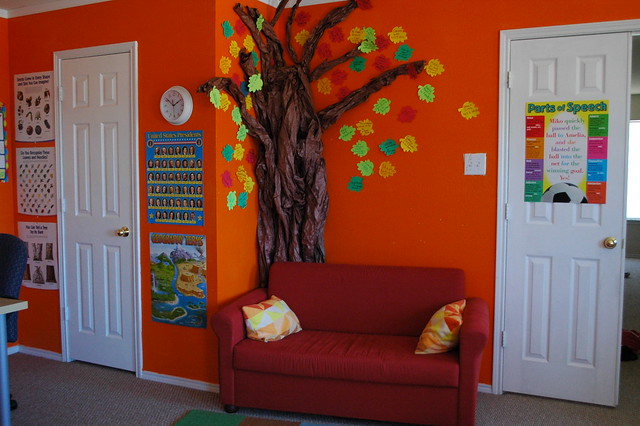
  1. Teachers build a real size tree (trunk and branches) and place it somewhere in the classroom. 
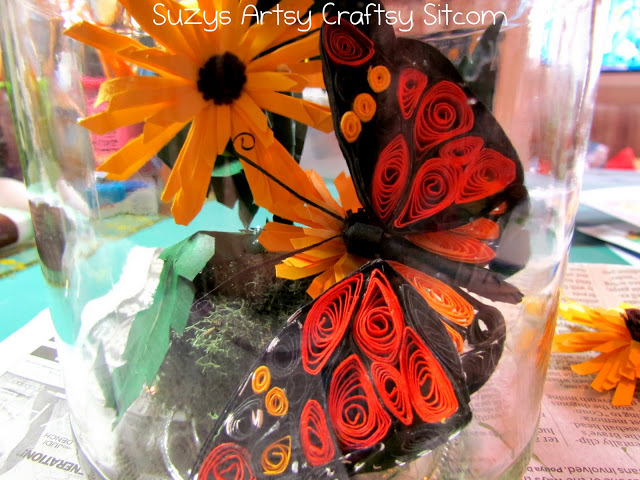
  2. Teachers then build different types of crafts on categories: for ex.: leafs for level 1, flowers for level 2, apples or other fruits for level 3, caterpillars for level 4, chrysalis for level 5 and butterflies for level 6. For these two steps the help of an artist should be more than welcome. Perhaps you have one in your parents community?
  3. Teachers then introduce the project to the children and parents: The Reading Tree is set at the beginning of the school year and can be cleared at the end. This project is suitable for all years, provided that the levels are adapted to the children's age. Children are told that this project aims to encourage them to read more and find out more things about the world or themselves. The advantages of reading should be explained, but teachers should also accept the fact that there could be children who refuse to participate in the project. Again, the project is not mandatory! Each child is given a reading card or booklet. One can be created and adapted by the teachers or just downloaded from any site with teacher resources. Here is an example:  
Each child should write down the titles of the book/s they read, the pages or hours spent reading and any other comments. The parents should then put a signature there as well, not so much to confirm what the child wrote but to show they are also aware of the child's efforts and that they also support and encourage the child at home. Teacher and parents should, for example provide a NON MANDATORY reading list, for different levels of reading, which the children could use for choosing their books. They could be group by themes or by the different concepts they will learn at school for each subject throughout the year. Children should be free to choose whichever books are appropriate for their age, following their interests and curiosities. This projects also offers children a good opportunity to learn about the School Library or the County Library.


       4. Different levels are then established. For example a child reaches level 1 after completing one hour of reading or 20 pages. For level 2, two or three hours or the equivalent in pages, and so on. Once the child has completed a certain level, s/he brings the completed reading card to the teacher. The teacher then gives him/her the correspondent craft for the level s/he completed, which the child will then hang in the Reading Tree, with a little paper note attached with his/her name on it and date.

Special "seasonal" crafts can be created for Easter, Christmas, Summer or Autumn. Should someone reach level 6 before the year is finished, then other levels can be created, with crafts such as cones, bird nests, birds or bees. The theme of the tree should be respected, as it is a wonderful opportunity for children to refresh biology concepts such as species of trees and correspondent leafs, life cycles, tree mini beasts, birds or the tree as a habitat.

Something else that can be done to support reading through this project is to create a Reading Cosy Corner under the tree, by adding a couch or bench with pillows. On the nearest walls you could put some shelves and children could bring at school some of their favorite books to share with colleagues. These books could be browsed during breaks or during language classes. The teacher/s could build activities around it to keep it active and the children engaged.


   5. At the end of the school year, the Reading Tree should be filled with life, and lots of colored, beautiful proofs of the children's work to build themselves as individuals and community. Since all the crafts will be named and dated, they can be taken home and kept in the family archive :).

I have discovered this project working with two wonderful children who participate in it at school at the International German School of Brussels. I hope it will inspire parents and teachers to build many more stimulating learning environments all around the world! Enjoy your reading everyone!

Source of pictures:

1. http://www.tipperarylibrarynews.ie/wp-content/uploads/2008/07/clonmelrt.jpg
2. http://farm5.staticflickr.com/4053/4458531454_cd4916c35e_z.jpg
3. http://suzyssitcom.com/wp-content/uploads/2011/07/Quilled-Butterfly5.jpg
http://pad3.whstatic.com/images/thumb/2/2e/Make-Ornamental-Pine-Cones-for-Christmas-Step-3.jpg/670px-Make-Ornamental-Pine-Cones-for-Christmas-Step-3.jpg

Reading charts:

http://www.sparklebox.co.uk/misc/homework/reading.html#.UpNgR9KkpZP

Crafts:

http://suzyssitcom.com/2013/05/feature-friday-quilled-bug-in-a-jar.html
http://www.wikihow.com/Make-Ornamental-Pine-Cones-for-Christmas

Why Play is so Important!

Although sometimes seen by parents or even educators as a “waste of time”, 21st century scholars consider that “free-play” (Bruce, T., 2006) has significant short and long term benefits for children, leading to a healthy psychical and emotional development and better understanding of the world (Bjorklung & Pellegrini in Papalia, Olds & Feldman, 2010). This article will cover an explanation of the concept of play, from different perspectives, together with its characteristics and types, taking into account the latest findings in the child development literature on the impact and benefits of play. I will also examine how play facilitates and is impacted by the child’s physical, intellectual, linguistic, emotional and social development during the first six years of life and how adults can support play.

Drawing from the works of Moyles (2005), Bruce (2006), Mcleod-Brudenell and Kay (2008), MCI (undated), Goldschmeid & Jackson (2009) and Wood & Attfield (2005), play is a freely chosen process in which children engage with their already acquired knowledge, values and skills, and which has as end result, although not direct purpose, the development or refinement of further lifelong physical, socio-emotional and cognitive skills. It is a natural inclination (Moyles, 2005), a creative attitude in which the child attains a degree of independence supported by the representations of his inner and outer worlds (Wood & Attfield, 2005).

There are several characteristics of play. First of all, play is child chosen and spontaneous (Wood & Attfield, 2005). It unfolds in a creative manner and it can stop as unexpectedly as it began. Adults may come with ideas of play but a child will only accept what will resonate with his/her inner needs or passions. So another characteristic is that play is an intrinsically motivated process (Bruce, 2006).

During play, children invent and pretend. They use the events and behaviours they have observed to experiment different types of behaviours and outcomes, attitudes and family or social roles (Bruce, 2006). They project themselves in the future, as teacher or doctors, or mothers or fathers, adopting the behaviours of their role models. Play focuses on the process, not the product (Wood & Attfield, 2005), and in this process it is them who have control over their actions and decisions. Children use play to repeat or try–out recent learning, and to create or consolidate friendships (Mcleod-Brudenell and Kay, 2008). When engaged in free-play, children are deeply concentrating and can hardly be distracted from their learning. This is why the best plays are never time-constrained. Ultimately, play is a fun process, it generates positive emotions and it brings balance. This is why play helps children cope with difficult events in their lives (MCI, undated).

There are different types of play identified by researchers. Moyles (2005) distinguishes between physical play (wrestling, hide and seek), object play (construction or play with cars) and pretence play (mother and father, princess pretend). Piaget (in Moyles, 2005) defined: sensorimotor play (in the first year of life, characterised by repetitive muscle movement and simple object play), symbolic play (focuses on pretend, also with objects or imaginary objects) and games play with rules (such as football). In addition, Smilansky (in Moyles, 2005), includes constructive play defined as object play (construction with geometrical shapes or puzzles). Hutt (in Goldschmeid & Jackson, 2009) describes epistemic play, within which children learn and explore the world and its properties (such as mud play). Parten (in MCI, undated), categorised play as: solitary play (such as riding a tricycle), parallel play (when a child plays alongside other children, each absorbed in his/her own activity), associative play (together with other children, following his/her own play agenda, for example a pretend riders play, where each child invents what his/her character would say) and co-operative play (children establish the rules and roles together). Goldschmeid & Jackson, (2009) researched on heuristic play, a type of exploratory play with objects without the direct intervention of the adult. Fantasy play is a highly imaginative play during which children act on their own, using real or imaginative objects (Bruner in Moyles, 2005). It develops creativity, language and fine motor skills and can become socio – dramatic play if it is done in cooperation with other children. During socio–dramatic play children consciously act out social interactions by means of symbolic representations; It counts among its benefits concentration, development of cooperative skills, creativity, projection of social or family roles, development of abstract thought and self-esteem (Kitson in Moyles, 2005).

Physical activity play involves a large body activity, such as running, climbing and other large body or large muscle activity. This type of play includes: “rhythmic stereotypes” (Smith in Moyles, 2005), gross motor movement during the child’s first months without any apparent function, “exercise play” (Smith in Moyles, 2005), gross locomotor movement, such as running and climbing in the context of play and “rough-and-tumble play”, which involves wrestling, grappling, kicking, tumbling, rolling on the ground or chasing; Physical play has numerous benefits: it helps maintain friendships and develop skills of emotional control, enhances the physical training of muscles, strength and endurance. Studies (Pellegrini & Davies in Moyles, 2005) show that exercise play in break times improves concentration during class activities. Some other types of play are communication play, such as mime, play acting or poetry and deep play, which allows the child to meet risky or potentially life-threatening experiences, to develop survival skills and conquer fear (Macleod-Brudenell & Kay, 2008).

In order to have a clearer picture of how play impacts and is impacted by the holistic development of the child in the first six years of age, we shall first take a closer look at the development processes that occur from birth to three years. Goldschmeid & Jackson (2009) describe how a baby’s first toy is the body of the caring adult. Before the age of 6 months, the baby can move his/her hand and grab his/her carer’s fingers, hair or certain surrounding objects. Eye – hand – mouth coordination marks a big step in his/ her development; as s/he is able to sit his/her universe unveils: objects, persons and movements. Before one year of age, the baby can clearly observe differences between different sets of objects and will begin imitating (Papalia, Olds & Feldman, 2010). 

Play at this stage is physical, rhythmic stereotypes occur. Gradually, the development of sucking, mouthing and handling allow epistemic and heuristic play to take place, allowing the baby to find out details about the smell, taste, feel and weight of a certain material. These types of play foster further development, such as decision making, concentration and mobility. The baby will recognize sounds heard in the womb and gradually will start experimenting with uttering sounds of language, not yet producing any recognizable words (Papalia, Olds & Feldman, 2010). During the first year of age, s/he will be able to live the basic emotions: joy, surprise, sadness, disgust and fury (Papalia, Olds & Feldman, 2010). Socially, the baby starts to trust in the main caregiver and develops a certain type of “attachment” (Bowlby in MCI, undated), an enduring emotional bond between him/her and the main caregiver. Parallel play enables babies to communicate with other babies through sounds, movements or facial expressions thus developing inter-personal skills.

During the second and third year, the baby will grow in height, allowing construction play to take place. Two and three year olds are able to build cube towers, climb stairs, run or jump. This opens a window of physical and exercise play opportunities. At this stage cognitive development impacts the intellectual play of the child, as s/he will be able to count, differentiate colours, understand consequences of actions. I have often watched children at this age being engaged in fantasy play: fishing with a stick, eating off leaves which served as plates, pretending to read newspapers or walking babies in carriages. The development of language enables the child to use new words and communicate with adults and children, therefore leaving an open door to simple communication play: songs with gestures, reading of poetry and cards games. In turn, this type of play fosters the development of vocabulary, pronunciation and the construction of sentences. Socially, two to three years old have an increasing need of independence. Solitary and parallel play remain the most preferred types of play.

Now that we have seen how development and play are interconnected during the first three years of the child, let us take a look of how they unfold from the age of three to six years old.
Physically, fine motor skills refine and writing skills develop. Now the child can pour liquids, eat with cutlery or get dressed on his own. S/he can jump or change running or walking directions and engage in rough-and-tumble play. This new degree of physical competence enriches the fantasy play, which becomes socio-dramatic play, as it is often done together with other children. I have seen children pretending to be animals, playing doctors performing precise eye or hand operations, going shopping with the families (composed of friends in the roles of children, husband or wives) and carrying full baskets. Their cognitive development allowed them to create intricate stories, engulfing abstract concepts or to thoroughly plan their play. Two boys were once building a spaceship, and planning what materials to use. They applied knowledge and used specific words such as “mission”, “oxygen” or “engine”. This was possible because of their language development. Between three and six, children know more than 20.000 words and can easily build short stories, and this is clearly reflected in their play (Papalia, Olds & Feldman, 2010). Emotionally, children at this age are able to recognize his/her feelings and the feelings of others (no longer ego-centric). They should be able to recognize when other children are playful or not. “Segregation” (Moyles, 2005) naturally happens as children spend more time in groups of similar sex. Socially, leadership and followership skills are developed, both with equal importance for the later adult (Bruce, 2006).

So what is the role of the adult in this natural development process? One of the most important roles of the adults relate to creating the necessary space, ensuring its safety and allowing independence and freedom for the child to explore it. All outdoor and indoor spaces should reflect the learning and development needs of the child, and the adult must make sure the equipment serves this purpose. Adults should supervise and observe the child and track his/her development, organize the objects and groups if the children are under three and give enough time for proper exploration and for putting the materials back as the session finishes. 

During heuristic play, the only intervention which could aid is to stop a child who will bother others, by suggesting him/her a new object and facilitating his/her interaction with it. Adults involvement in certain types of play such as socio-dramatic play can enhance the child’s learning by focusing his/her attention and challenging the process. The adult should act as a behavioural model and help children differentiate between reality and fiction. An adult can subtly structure the learning in play without significantly reducing the child’s ownership (Moyles, 2005). Lindon (2002, pp. 5) argues that: “children cannot benefit from their play if adults overplan and over-supervise the daily events of any setting or the family home”; therefore, adults should respect the child and his/her play agenda and understand which the right moment to intervene is.

Play is one of the most important processes which need to occur unhindered from infancy for the holistic development of the young child. It comes in different types and contexts and it affects and it is affected by each area of development: physical, cognitive, social, emotional and linguistic. It evolves together with the development of the child and changes according to his/her needs. Adults can facilitate this process by ensuring a safe and stimulating environment and by knowing when to intervene or not. All children should be able to experience play equally, and real alarm signals should be addressed when a child does not engage in play!

Source of the images:

  1. http://www.aspenhillclub.com/Portals/252655/images/kids-playing.jpg
  2. https://blogger.googleusercontent.com/img/b/R29vZ2xl/AVvXsEjv92g6y2klf5jN91mhKTOXzmjNgDt0RfSDQvjuYh1wfMJR6MZKH0McM94eIse1JmU06t_mIbucB0_SL-YahksJxmj93twENE30QafulVXQW3cMxjx87J558vD_vtJK68tX8u5j5QUOk0zz/s1600/AAA_7160.jpg
  3. http://theimaginationtree.com/wp-content/uploads/2013/06/Roads-and-construction-site-in-play-dough.jpg
  4. http://www.myantelopevalley.com/media/2013080681807boyswrestling.jpg
  5. http://www.chilboltonpreschool.com/wp-content/uploads/2013/01/role-play.jpg
  6. http://studio3music.com/wp-content/uploads/2010/10/fantasy-play.jpg
  7. https://blogger.googleusercontent.com/img/b/R29vZ2xl/AVvXsEjP9cK8Oq8HdgDaH_TnE9c_s0OYczqsKNJdK6T9p7V1loxKyax2tAFN-69xJEokguk010u5FeB_7IvPWCIyCVXf5quMhFQsSQ1E-Xv0v2B_6esk2KTnkfrh2KyCLa04VzCHvWD9fAKSSFLR/s1600/IMG_6433.JPG


Bibliography

  • Bruce, T. (2006 reprint) Developing Learning in Early Childhood London: Sage
  • Elkind, D., (2009), Learning from play Montessori International, (Issue 91, April/June) pp 12 – 13
  • Fass, P. S., (2004), Encyclopedia of Children and Childhood In History and Society New York: Macmillan Reference USA
  • Goldschmeid, E. & Jackson, S. (2009 reprint) People Under Three London: Routledge
  • Lillard, P.P, (1972),  Montessori, a Modern Approach  New York: Schocken Books
  • Lindon, J., (2002), Factsheet: What is play [online] National Children’s Bureau: London, available online from: http://www.somerset.gov.uk/irj/go/km/docs/CouncilDocuments/SCC/Documents/CYP/NCB%20What%20is%20Play.pdf, date accessed (2.07.2013)
  • Macleod-Brudenell, I, &  Kay, J. (2008, Second Edition) Advanced Early Years for Foundation Degrees & Level   4/5  Harlow: Heinemann  
  • Montessori Centre International (undated) Module 2 Child Development London: MCI
  • Morris-Coole, S., (2009), The Serious Business of Play Montessori International, (Issue 91, April/June)
  • Moyles, J. (2005 2nd Edition) The Excellence of Play Maidenhead: Open University Press
  • Nutbrown, C. & Clough, P. (2006) Inclusion in the Early Years London: Sage
  • Papalia D. E., Wendkos-Olds S. & Duskin-Feldman, R., Human Development, (2010, 11th ed.), Bucharest: Editura Trei
  • Wood, E. & Attfield, J. (2005 2nd Edition) Play, Learning and the Early Childhood Curriculum London: Paul   Chapman Publishing

Four Facts about Language Development

Understanding more about language development can help us teachers and parents have a clearer picture on our role in facilitating it. Sometimes, our expectations are too high or sometimes we neglect some problems in language development children might have. Most of the time, language acquisition is something natural which just unfolds without too much effort from parents. If children are stimulated, however, that can be a different story. The vocabulary could be even richer, the healthy habit of reading might be developed and the child may ultimately learn to express him/herself much easier. All these have major implications for the child's future adulthood, form both career or personal life perspectives.

Here are some of the facts that may make you reconsider your verbal interactions with your children:
  1. The first facts is common sensical, but I will write it here anyways :) Positive reactions and encouragement of the first attempts of talking influence the child's language trajectory. Behaviorist theory suggests that language, as other aspects of human development is absorbed by children through operant conditioning, meaning that certain actions and behaviors are enforced by giving a reward. For example a parents reaction to a child babbling may determine the shape of his futures sounds. Parents may reward children with attention, a positive comment, a smile or a touch and the child will be more likely to repeat the sound. "Baby talk" also known as  "motherese" or "parentese" helps babies pay closer attention to speech against background noise and puts emphasis on the important words or structures.
  2. Children will learn how to talk by themselves with no formal education provided they are a part of society and they get plenty of social interactions. Chomsky's Language Acquisition Device is a theory which refers to the innate and universal ability of children to absorb and process language from his/her environment. This device may explain why children across cultures go through the same stages of language development. For example a child in Spain may invent the Spanish version of "runned". Should the social interaction lack, language development, especially after 5 is more difficult and less successful. The are two theories which seem to support this: Critical Period Hypothesis, which  is based on studies of feral children and suggests that 0-5 is critical to acquiring the language skills a human being needs to properly function in society.  The second one, Social Interactionist theory, explains how language developed focusing on the interactions between the child and adult, as a partnership between a beginner and someone who is more competent. As the child develops and makes new discoveries, so does the need to share these discoveries grows, the child turning towards those close trusted adults around him. This is how the social aspect impacts the development of language. The lack of socialization in the first years of life can severely damage a child's brain and consequently his/her language acquisition.
  3. For young children up to five learning to speak two or three languages at once is as easy as learning just one, provided the necessary exposure. Bilingual children have the same milestones in language development and have a deeper understanding of language in comparison to monolingual children. 
  4. Most speech delays can recovered until de age of seven. However, they can cause harm to the social or emotional development. Here is a list of signs of language delay put together by the Canadian Hanen Center. Parents and teacher should have in mind that speech delays are not the same as language delays!
I recommend watching this amazing TED Talk by Patricia Kuhl, which will shed more light on the internal mechanisms of language development in babies!


Sources of pictures:


  • http://0.tqn.com/d/preschoolers/1/0/7/L/-/-/CA15040.jpg
  • http://cdn1.disneybaby.com/images/2011/10/mom-baby-pattycake-photo-450x400-ts-rbby_591.jpg


  • BIBLIOGRAPHY

    1. Brandone, A., Salkind S., Golinkoff R. & Hirsh-Pasek K. (undated) Language Development [online]available from: http://udel.edu/~roberta/pdfs/Bear%20chaptBrandone.pdf (date accessed 5/10/13)
    2. Brock, A., & Rankin, C., (2008) Communication, Language and Literacy from Birth to Five [online]available from: http://www.sagepub.com/upm-data/21820_C01.pdf (date accessed 5/10/13)
    3. De Houwer, A., (2012), Milestones in Bilingual Children's Language Development [online]available from: http://literacyencyclopedia.ca/index.php?fa=items.show&topicId=313, (date accessed 5/10/13)
    4. Macleod-Brudenell, I. & Kay, J. (2008, Second Edition) Advanced Early Years for Foundation Degrees & Levels 4/5 Harlow: Heinemann
    5. Montessori Centre International (undated a) Module 2 - Child Development London: MCI
    6. Montessori Centre International (undated b) Module 3 Observations London: MCI
    7. Oesterreich, L. (1995a) Ages & stages - three-year-olds [online] available from: National Network for Child Care(NNCC) [online] www.nncc.org/Child.Dev/ages.stages.3y.html (date accessed 5/10/13)
    8. Oesterreich, L. (1995b) Ages & stages - two-year-olds [online] available from: National Network for Child Care(NNCC) [online] http://www.nncc.org/Child.Dev/ages.stages.2y.html (date accessed 5/10/13)
    9. Papalia D. E., Wendkos-Olds S. & Duskin-Feldman, R., (2010, 11th ed.), Dezvoltarea Umană (Human Development), București (Bucharest): Editura Trei
    10. Raising Children Network (2011) Language development: 3-4 years [online] available at: http://raisingchildren.net.au/articles/language_development_3-4_years.html/context/566 (date accessed 5/10/13)
    11. US National Institutes of Health, (2010) Toddler development [online] available at: http://www.nlm.nih.gov/medlineplus/ency/article/002010.htm (date accessed 5/10/13).