Showing posts with label amazing educational projects. Show all posts

How to make School Rock!

When I was in London for a workshop, one of the trainers passionately spoke about this project she heard about some time ago. It was designed and implemented by a team of unconventional educators in Belgium and it seems to have been a great success in the country.

They decided to go to schools around Belgium and have one week of school built around the theme of rocks!

They first tried it on a class where, Monday morning they brought in class and placed on the teacher's desk a large impressive collection of rocks of all types and sizes. The children gathered around them, and explored them curiously. Some of them were not really interested, but some of them began touching and moving them. They were curious of how they tasted or what sounds they make when bashed against each other. Shortly after they began to classify them in groups of different sizes and colors.

The second day, children found around the rocks various books on rocks and minerals. While some children were quite uninterested, others began to explore by themselves and identify each type of rock and understand their formation. They shared the information in class and at home.

The sudden apparition of rocks made a lot of buzz in the lives of those children. They began to be more curious and so the question "What can we do with all these rocks?" quickly appeared into their minds. They started to make patterns out of them, to build towers, to build bunkers, alleys and even portraits.

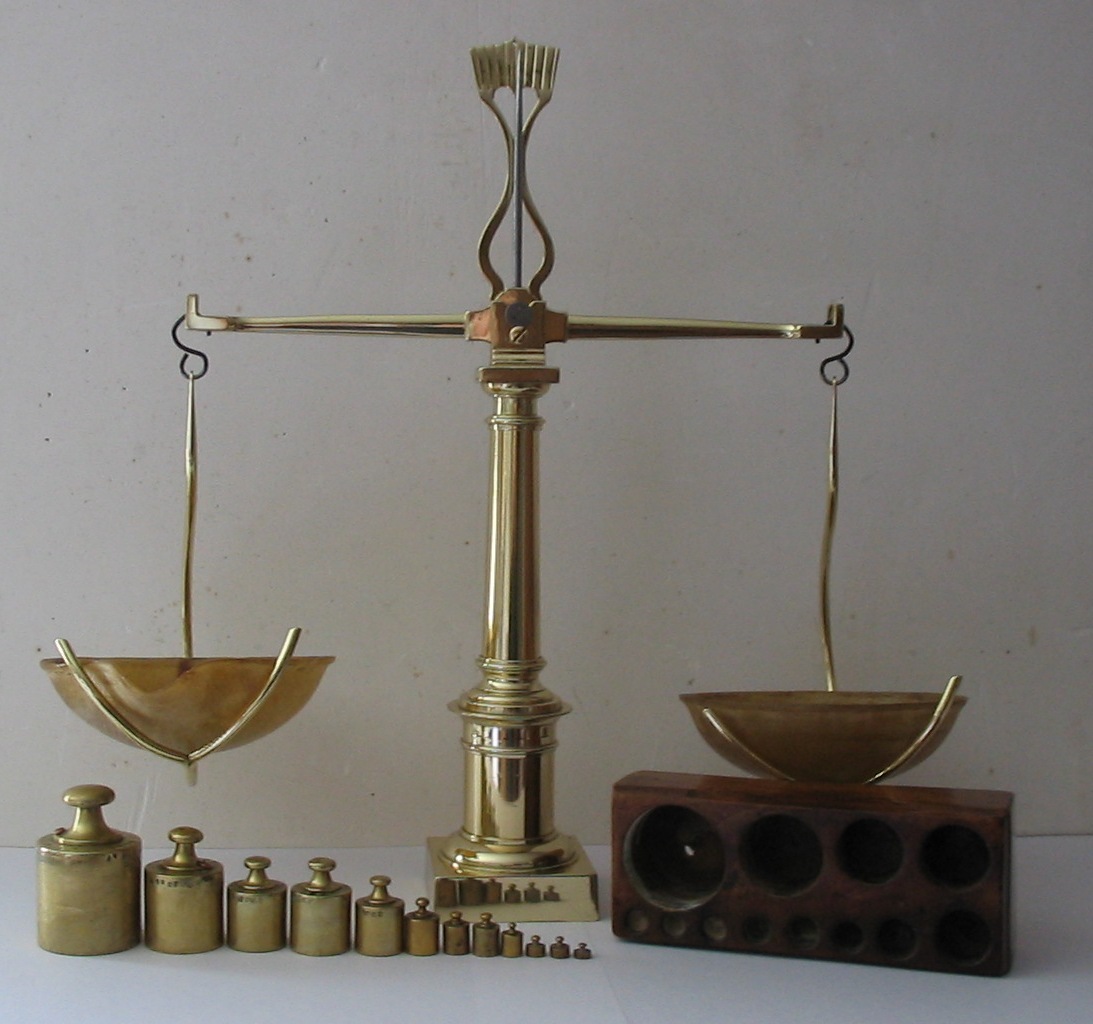
The following days, different types of weighting scales were found around the classroom. Children began to use them and see how much different rocks weighted. They compared the weights of similar sized rocks and used several scales to weight single rocks. Some children began recording the results. One child was wondering how many feathers would take to equalize the weight of the smallest rock. The teacher brought feathers so the children happily followed up on the idea.

The last days of the project, instead of scales, the children found paint and brushes. They took on to painting the rocks. Some of them painted two or three, but others spent their whole day painting one after another. Lots of creative patterns emerged, inspired by nature or their day to day lives.


And so after one week of fun and exploration, practical and theoretical learning, they ended their Rock Project. They learned about the types of rocks and their formation. About concepts such as weight, mass or gravity; they found out about different types of scales and how to use them. They read. They learned where and how to search for information. They followed up on their interests and curiosities. They worked individually or in groups, spontaneously, without adult intervention. Like real scientists they began to record their results. They expressed themselves in a creative manner with quite inexpensive materials. I also liked the fact that the adults guided them sensitively and only thought of what materials to introduce and when. They did not come with a preset agenda for the children, but rather responded to their interests. I think that made learning more powerful.

There is a large number of creative activities that can be done on this theme to cover all areas of development. I really like how the children in D Y Patil International School in Belgium used one of Belgium's most plentiful resources - chocolate :) - to recognize and create sedimentary, metamorphic and igneous rocks! You can find the pictures from their science experiment here. Another resource you might find useful if you would like to take on such a project is this website http://www.rocksforkids.com/, which contains lots of useful information and pictures on rocks, minerals and fossils!

Thank you for reading and either you are a teacher, parent or an education enthusiast, good luck with creating the most exciting, stimulating learning environments!

Sources of pictures:


  1. http://www.naturerocks.org/cs/groups/webcontent/@photopublic/documents/media/painted-rocks-557x423.jpg
  2. http://static2.wikia.nocookie.net/__cb20120318150747/units/images/1/17/Balance_%C3%A0_tabac_1850.JPG
  3. http://thecroftbaguette.files.wordpress.com/2009/10/100_0337.jpg

Two by Two: Two Children's Books for a Good Night's Sleep

Two by Two is an exciting children literature project. Its purpose is to bring more or less known children books in the attention of teachers, parents and children around the world, paired on specific themes such as death, communication, self esteem, anger management, friendship or unconditional love. A lot of these books were brought to my attention by a very dear friend, with whom I share  the passion for child literature. Almost all of these books are in my personal library, carefully chosen to fulfill some of the criteria described here, and have been used during my teaching classes. The children I work with had wonderful reactions to them, and this has inspired me to write this Two by Two series.


Two by Two: Two Children's Books for Good Night's Sleep

1. Silly Billy, Anthony Browne

Anthony Browne is an amazing British artist! I really love both his illustrations and his stories. The stories are original, profound and insightful and deal with different facets of childhood. His illustrations are brilliant! They are often full of hidden meanings which children can discover gradually. Browne  uses different characters from famous classical paintings to educate children on the history of art or to express certain feelings in an unconventional way. He also uses gorillas as characters, being inspired by real stories and the contrast between their strength and their humanity and gentleness.  


Silly Billy is a book that can help children deal with anxiety and some of the fears they face when they go to bed. Browne leaves nothing to chance. If you carefully analyze the cover you will see something that looks like a doll, with a sad face, and a boy walking towards the future with a happy face. These two clues make you curious from the start to discover Billy's story and why he's called silly in the title. 

From the very fist pages we find out Billy was a boy who would worry about a lot of things. Not to give children ideas of real things to worry about, the author had Billy worry about hats and shoes, clouds and rain and giant birds, fears that are not at all common among children. The use of black and white for the illustrations of Billy's fears are very compelling. Browne also makes references to the work of Magritte by using his style of drawing the hats.


Of course his parents tried to talk to him, and reassure him they are there to protect him. But for Billy this was not enough. One night, he had to sleep at his grandmother's house.  He got particularly worried when he slept in other places, and and his anxiety grew, he felt a bit ridiculous and went into his grandma's room. 


His grandma reassured him that he wasn't silly at all! She then came with a solution for his worries, some worry dolls for him to tell all his worry to, and put them under his pillow. They would take his worries for him, and he could sleep in peace. Billy tried the worrying dolls and for three days he slept very well. 


But soon, Billy got worried again! He felt bad for the worry dolls, to carry all the weight of his worries for him, so he decided do to some crafty work and make some worry dolls for his worry dolls!

And that was the end of Billy's worries. At the end of the book we get a short explanation. These worry dolls actually come from Guatemala, where children would make them from wood, colorful pieces of cloth and thread. They have proven to be quite useful for children, and today they are even used in certain hospitals to help children deal with their fears. 

Many teachers accompany this books with discussions about fears or with practical activities. The dolls are easy to make. Here is an example of a doll making activity inspired by the book. Another example of activity is this animation made by the children of Columbia Primary School for the London's Children Film Festival (2009).  You can find many articles and interviews with Anthony Browne on the internet. Here is a series of 6 clips from a conference where he spoke about his inspiration and the stories behind his books and illustrations!


2. The Little Giant, Philippe Dumas

For the second book I choose one a little bit easier and with no negative emotional charge. Philippe Dumas's story is perfect for a warm, cosy, full of fantasy bedtime read.

The book has a witty start as the author presents the two main characters: a boy and a girl who broke anything and never spoke bad words. The little readers are reassured as they flip the page and discover the boy and the girl were two plastic dolls!

The owner of the dolls, a little giant girl, was happy to play and sleep with them. During the day, she was a giant, but at night, she would lessen into their size and they would tip toe out of their room and eventually out of the house. They would travel on the dog and roam the fields at night. Run through the wind, watch the stars, the animals of the night, the sounds of the nature. They would swim with the ducks and make fire for the butterflies. They would then stop at the rabbits den, where they would be awaited with tea or warm onion soup, listen to stories, then sit on trees with the crows and pass by the cows in the field on their way back. As the night grew shorter they would hurry back home. The little girl would regain her normal size. And as soon as they jumped back into bed the morning light would come trough the window, and together with it, the biggest giants would come into the room to say good morning! 

For me this story is more than just a simple tale. With the help of beautiful, colored illustrations, it proposes an exercise of imagination, empathy and a lesson for both children and adults on how the world is scaled and the magic of childhood. As a montessorian, this book is perfect not only for children but for all the adults who yet need to understand the relevance of child sized environments for their children's proper development!

Literacy in Schools: The Reading Tree

Have you ever heard of a Reading Tree?

I myself often enjoy reading in the park under certain trees, but this concept is something a bit different. It is related to literacy in class and it encourages one of the healthiest intellectual activities for children with the involvement of the whole community of children, including their parents! It helps children develop their reading skills thus enhancing their vocabulary and understanding of the world, it allows a whole class to work for a common goal and it also creates some understanding around biology concepts around the tree as a living habitat.

So here is how such a project can happen:


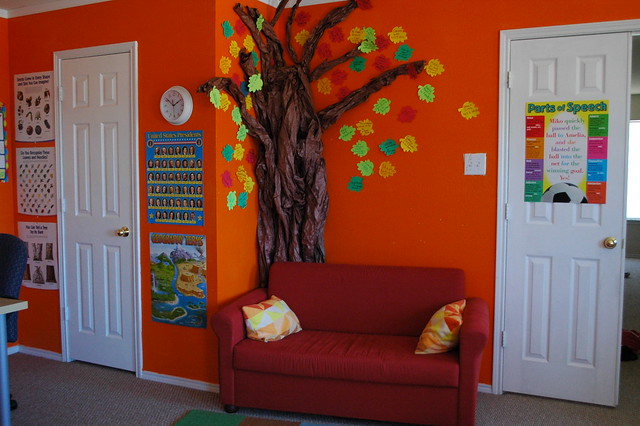
  1. Teachers build a real size tree (trunk and branches) and place it somewhere in the classroom. 
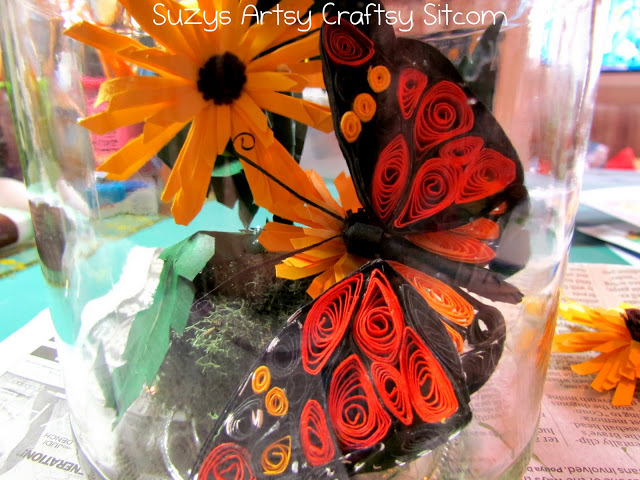
  2. Teachers then build different types of crafts on categories: for ex.: leafs for level 1, flowers for level 2, apples or other fruits for level 3, caterpillars for level 4, chrysalis for level 5 and butterflies for level 6. For these two steps the help of an artist should be more than welcome. Perhaps you have one in your parents community?
  3. Teachers then introduce the project to the children and parents: The Reading Tree is set at the beginning of the school year and can be cleared at the end. This project is suitable for all years, provided that the levels are adapted to the children's age. Children are told that this project aims to encourage them to read more and find out more things about the world or themselves. The advantages of reading should be explained, but teachers should also accept the fact that there could be children who refuse to participate in the project. Again, the project is not mandatory! Each child is given a reading card or booklet. One can be created and adapted by the teachers or just downloaded from any site with teacher resources. Here is an example:  
Each child should write down the titles of the book/s they read, the pages or hours spent reading and any other comments. The parents should then put a signature there as well, not so much to confirm what the child wrote but to show they are also aware of the child's efforts and that they also support and encourage the child at home. Teacher and parents should, for example provide a NON MANDATORY reading list, for different levels of reading, which the children could use for choosing their books. They could be group by themes or by the different concepts they will learn at school for each subject throughout the year. Children should be free to choose whichever books are appropriate for their age, following their interests and curiosities. This projects also offers children a good opportunity to learn about the School Library or the County Library.


       4. Different levels are then established. For example a child reaches level 1 after completing one hour of reading or 20 pages. For level 2, two or three hours or the equivalent in pages, and so on. Once the child has completed a certain level, s/he brings the completed reading card to the teacher. The teacher then gives him/her the correspondent craft for the level s/he completed, which the child will then hang in the Reading Tree, with a little paper note attached with his/her name on it and date.

Special "seasonal" crafts can be created for Easter, Christmas, Summer or Autumn. Should someone reach level 6 before the year is finished, then other levels can be created, with crafts such as cones, bird nests, birds or bees. The theme of the tree should be respected, as it is a wonderful opportunity for children to refresh biology concepts such as species of trees and correspondent leafs, life cycles, tree mini beasts, birds or the tree as a habitat.

Something else that can be done to support reading through this project is to create a Reading Cosy Corner under the tree, by adding a couch or bench with pillows. On the nearest walls you could put some shelves and children could bring at school some of their favorite books to share with colleagues. These books could be browsed during breaks or during language classes. The teacher/s could build activities around it to keep it active and the children engaged.


   5. At the end of the school year, the Reading Tree should be filled with life, and lots of colored, beautiful proofs of the children's work to build themselves as individuals and community. Since all the crafts will be named and dated, they can be taken home and kept in the family archive :).

I have discovered this project working with two wonderful children who participate in it at school at the International German School of Brussels. I hope it will inspire parents and teachers to build many more stimulating learning environments all around the world! Enjoy your reading everyone!

Source of pictures:

1. http://www.tipperarylibrarynews.ie/wp-content/uploads/2008/07/clonmelrt.jpg
2. http://farm5.staticflickr.com/4053/4458531454_cd4916c35e_z.jpg
3. http://suzyssitcom.com/wp-content/uploads/2011/07/Quilled-Butterfly5.jpg
http://pad3.whstatic.com/images/thumb/2/2e/Make-Ornamental-Pine-Cones-for-Christmas-Step-3.jpg/670px-Make-Ornamental-Pine-Cones-for-Christmas-Step-3.jpg

Reading charts:

http://www.sparklebox.co.uk/misc/homework/reading.html#.UpNgR9KkpZP

Crafts:

http://suzyssitcom.com/2013/05/feature-friday-quilled-bug-in-a-jar.html
http://www.wikihow.com/Make-Ornamental-Pine-Cones-for-Christmas

The School of Circus - An Amazing Learning Environment

I have relocated to Brussels since a year and a half and in this period, as a curious enthusiast, I've been gathering many good case practices in education - school or preschool. The following project has just ended last week and took place at the International German School of Brussels.

The staff of the German school had a fantastic idea! They took the children out of the confines of the classroom for one week, everyday, and dropped them in the magical world of the Circus.

Now many of you would perhaps be a bit reticent to such eccentric endeavor.  Such a project could cause delays in the teaching of all those important subject areas, such as maths, science or languages. It might put the children in potential danger, disrupt their learning rhythm, or they might just loose precious learning time from school, playing around for a whole week!

But hold your thoughts until you hear what the children have, actually been doing! For five days, all classes have been working hard during different workshops: animal training: dogs, goats, pigeons and horses, circus arts: clowning, aerial or floor acrobatics, trapeze artistry  and juggling. Some children were the editorial team of the project - journalists and editors, from the second to the sixth grade, writing articles from the venue which were published in the school magazine and on the school website. In one of their first articles they described the cheerful reaction the children had when they were told about the project and the excitement it brought to the whole school. In another they wrote about the story of the circus, run by the Kaselowsky family for more than seven generations. Today, this circus specializes in working with schools and nurseries to develop Children in the Circus programs, respecting child safety norms and enabling children to develop knowledge, skills, attitude and values related to this theme. 

So if we start doing the maths, it sums up to a whole load of competencies developed around an exciting theme through practical hands on activities: refinement or gross and fine motor skills, balance and orientation, oral communication, teamwork, social skills, writing articles, taking interviews, reading and editing, knowledge about animals, how they live, what they eat, animal behavior and anatomy, self-confidence, self-awareness, resilience, discipline and coordination of movement. 

And this is not everything! At the end of the week, on Friday, the children had a performance for family and friends showing them some of the things they have learned throughout the week!

Can you imagine your child going through such a project? The explosion of colors, knowledge and skills? The emotions and confidence after performing in front of the whole school? The joy of collaborating with younger or older children for a newspaper? The pride in taking interviews or training a dog?

These are the kind of projects that break norms and create such intense learning experiences  that transcend textbooks or any other types of lessons! I am sure this was one week the children will remember all of their lives!


Sources:
  1. DEUTSCHE SCHULE BRÜSSEL - http://www.idsb.eu
  2. PROJEKT-CIRCUS CASELLY - http://www.circus-casselly.de/